

RTFs play a vital role in the behavioral health care continuum for youth with special, and often complex, emotional, behavioral and psychiatric needs. According to The American Academy of Child and Adolescent Psychiatry, “Residential treatment can help children and adolescents whose health is at risk while living in their community. For example, the programs are helpful for those who have not responded to outpatient treatment, who have education needs that cannot be met in less restrictive settings at their local schools, or who are in need of further intensive treatment following inpatient psychiatric care.[1]”
National Association for Behavioral Healthcare further explains, “The goal of psychiatric residential treatment is to provide care to children and adolescents with significant social and emotional needs in a non-hospital, highly structured, and therapeutic environment. These settings provide a safe place where individuals can gain stability, support, and treatment for mental diagnoses, substance abuse, intellectual/developmental disabilities, sexual conduct disorders and other disabilities that require stabilization.” [2]
UHS’ residential treatment programs are designed to provide 24-hour, structured therapeutic intervention services to meet the personal needs of the individual, with a special emphasis on independent living skills and reintegration to the individual’s home through the support of outpatient services and support.
Fast Facts:
- Admission into our RTF programs require an order from a licensed psychiatrist, advanced nurse practitioner or psychologist who determines that this high level of residential care is needed. Admission to an RTF program may be due to the individual’s failure to respond to a less restrictive environment and treatment in the last three months, or, if adequate, less-restrictive options are not available in the individual’s community.
- If the patient is currently in an acute care facility the treatment team may recommend that residential treatment is appropriate prior to returning to their community.
- Patients referred to our RTFs often have complex behavioral, mental or psychiatric issues.
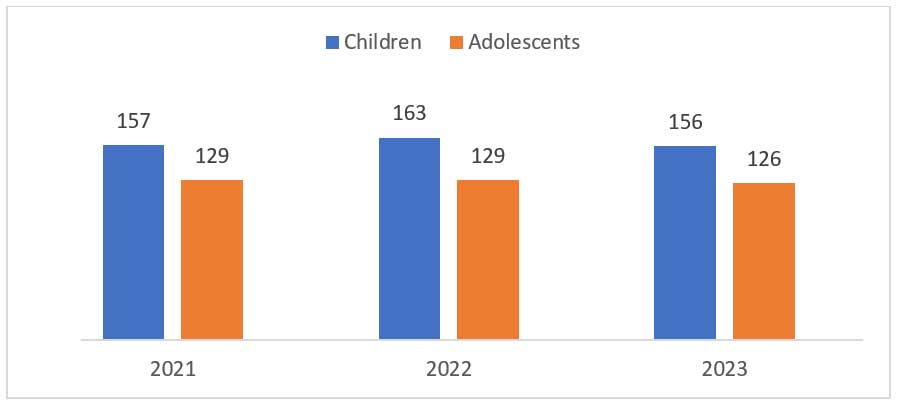
- A patient’s length of stay at a RTF will vary by facility and the individual. The average length of stay at our children/adolescents residential treatment programs remained relatively consistent in past three years:
UHS RTFs: Average Length of Stay (2021 – 2023)
“Sometimes it takes years to see all the benefits and it is difficult when your child needs residential psychiatric care, but you have to do what is best for your child. When your child is a danger to themselves or others, they need psychiatric help. Our son spent 4 months here several years ago. He didn’t come home perfect, but he made great progress while he was there and the progress continued when he got home. We came from out of state and the traveling to visit him was hard, but it was so worth it. He has overcome so much and we are so proud of him.”
-W.J., Parent of Former Laurel Heights Hospital, May 2024
[1]American Academy of Child & Adolescent Psychiatry, “Residential Treatment Programs”, No. 97; September 2023.
[2] National Association for Behavioral Healthcare (NABH) – NABH Residential Treatment-A Vital Component of the Behavioral Healthcare Continuum (April 12, 2021)